

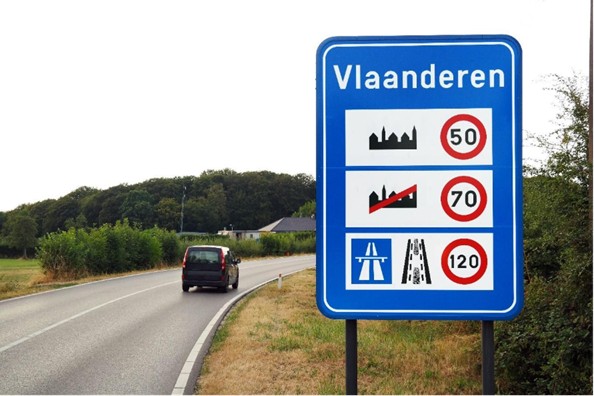
Belgium is easily accessible from the UK and remains a popular destination for tourists and expats.
However, driving in Belgium can be quite different from driving in the UK. If you’re planning a trip across the Channel and have expat car insurance in place, read our tips for driving in Belgium, so you know what to expect before you set off.
A Guide to Driving in Belgium
Belgium is an ideal driving holiday, whether by car, motorbike or motorhome. Despite its compact size, the country offers plenty to explore, from 16 UNESCO World Heritage Sites to miles of scenic coastline and countryside.
Getting around Belgium is also made easier and more enjoyable by a series of toll-free motorways and well-maintained A-roads. But as with any country, there are certain rules and regulations you should be aware of when driving in Belgium.
From Belgium speed limits to driving in Belgium as a tourist, here’s everything you need to know.
General Advice for Driving in Belgium
Driving in Belgium can be quite a change if you’re used to UK roads. You’ll need to drive on the right and overtake on the left, which can feel unfamiliar at first. Traffic coming from the right has priority, and trams always have right of way, regardless of which side they’re travelling on.
Speed limits are strictly enforced, so take care. Fines can be as high as €4,000 if you’re caught driving up to 40 km/h over the limit. Hands-free phone use is permitted, but using a handheld mobile is not. You’ll also need valid car insurance, with at least third-party cover in place.
It’s also worth noting that Belgium has three official languages: Dutch, French and German. As a result, road signs and place names may appear in different languages, so familiarising yourself with alternative spellings before you set off can be helpful.
Driving in Belgium Requirements: A Quick Summary
Like any country, Belgium has some important driving requirements you should be aware of before getting behind the wheel.
Here’s a quick summary of everything you need to know:
- Like the majority of European countries, Belgians drive on the right side of the road, not on the left as you do in the UK.
- Vehicles overtake on the left
- Wearing seatbelts is a legal requirement in Belgium as it is in the UK
- The minimum driving age in Belgium is 18 and applies to most vehicles
- It is illegal to use a mobile phone while driving, unless you have a hands-free system
- The standard blood alcohol limit in Belgium is 0.05%. However, the limit drops to 0.02% for professional drivers and sometimes for novice drivers. Some areas like Antwerp and Limburg also enforce zero tolerance (0.0%) during specific campaigns and road safety initiatives
- Children under 1.35m must use an appropriate child seat or restraint, or travel in the back seat wearing a seat belt
- Child seats must not be placed in the front seat unless the airbag has been switched off
- You must ensure your vehicle meets specific entry standards in cities where a low-emission zone (LEZ) in active. Your vehicle must also be registered for each zone before you travel
- All vehicles must be insured, including expat car insurance for anyone travelling from the UK
Belgium Speed Limits
Belgium uses the metric system, so all speed limits and distances are shown in kilometres rather than miles like the UK. Speed limits are generally 20km/h (12mph) in residential areas, up to 50 km/h (31mph) in built-up areas, and up to 120 km/h (75mph) on motorways.
| Location | Speed limit |
| Residential areas | 20 km/h |
| Built-up areas | 50 km/h |
| Non built-up areas | 90 km/h |
| Motorways | 120 km/h |
Certain vehicles, such as those towing trailers, are subject to specific speed limits. Therefore, always check local driving regulations before you travel.
What are Speeding Fines in Belgium?
Speeding fines in Belgium vary from €53 to €4,000, depending on how fast you’re driving and the type of road.
Non-residents can face large on-the-spot fines of €866, which must be paid immediately to the police in exchange for a receipt.
Speeding fines are strictly enforced, so make sure you obey all speed limits to avoid potentially hefty fines.
Speeding fines in Belgium vary from €53 to €4,000, depending on how fast you’re driving and the type of road.
Non-residents can face large on-the-spot fines of €866, which must be paid immediately to the police in exchange for a receipt.
Speeding fines are strictly enforced, so make sure you obey all speed limits to avoid potentially hefty fines.
Belgium Road Signs
All road signs in Belgium, including distance markers, are displayed in kilometres and metres. If you’re driving to Belgium from the UK, it’s important to familiarise yourself with the country’s road signs to ensure a safe journey.
Some of the most common road signs in Belgium include:
Warning signs
These are used to inform drivers of potentially hazardous road conditions, including speed limits where applicable. Common examples include:
| Tram crossing | Roadworks |
| Railroad crossing with gates | Direction signs |
| Toll booth ahead | Give way distance |
| Speed limits | No waiting/parking |
Indicatory signs
These notify drivers about the road they are using. For example:
| Entering built-up areas | One-way road |
| Number of a ring road | Priority road |
Numbered signs
Numbered signs refer to a system of road classification and traffic regulations. They are usually represented by a letter and number code, such as ‘A’ for motorways and R for ring roads. They also indicate speed limits in KM/h, route directions and more. For example:
| N-ROAD: Normal road | E-ROAD: European Motorway |
| A-ROAD: Motorway | R-ROAD: Ring road |
Driving in Belgium as a Tourist: Your Essential Checklist
You are legally required to carry specific documents and safety items in your vehicle when driving a UK car in Europe, including Belgium.
The rules are intended to enhance driver safety on Belgian roads and comply with the law. Here’s what you’ll need to drive in Belgium:
| Essential Documents | |
| A full, valid UK driving licence | Proof of ID, such as a passport |
| Valid car insurance, including an insurance certificate | Written permission from the vehicle’s registered owner if you’re borrowing a car |
| In-date MOT certificate | V5C vehicle registration certificate |
| A UK identifier sticker displayed on the car if the vehicle is UK-registered |
| Important Safety Items | |
| Headlight beam deflectors | Hi-vis warning triangle |
| First aid kit and fire extinguisher (mandatory for Belgian-registered cars; recommended for overseas vehicles) | Reflective jackets for all passengers in case of an accident (failure to wear can bring a €55 fine) |
| Spare bulbs or a bulb replacement kit (recommended to avoid on-the-spot fines | Approved car seats for children under 1.35m tall |
Driving in Belgium: Low-Emission Zones (LEZs)
Like many European cities, Antwerp, Brussels and Ghent have introduced low-emission zones (LEZs).
Diesel vehicles meeting Euro 5 or Euro 6 standards can enter these zones free of charge. Euro 4 diesel cars are permitted in Antwerp and Ghent for a fee (approximately €20 per day).
Petrol cars must meet Euro 3 standards in Antwerp and Ghent, and Euro 2 in Brussels. Electric vehicles are fully exempt from restrictions.
Can You Drive an Electric Car to Belgium?
Yes, driving an electric car from the UK to Belgium is relatively straightforward.
Belgium contains more than 7,000 standard charge points spread across the country, in addition to 400 fast charging stations. With further investment in infrastructure planned over the coming years, charging your vehicle in Belgium is going to become progressively easier over time.
If you’re taking your EV from the UK to Belgium, you should plan your journey carefully and identify the nearest and most convenient chargepoints before setting off.
You can pay for EV charging in Belgium by registering with the specific app for the chargepoint and linking it to your debit or credit card.
Is Belgium Part of the New EU Entry/Exit System (EES)?
Yes, Belgium is part of the European Union’s new automated IT border system, also known as the EU Entry/Exit System.
Launched in October 2025, the system records non-EU travellers each time they cross an EU external border.
Replacing manual passport stamps, self-service kiosks will capture travellers’ names, travel document details, biometrics (fingerprints and facial images), plus entry and exit dates and locations. The system will also track overstayers and denied entries.
Non-EU/Schengen visitors will provide fingerprints and facial images the first time they enter, while those with an existing visa will not need to resubmit biometrics. The EES will cover all non-EU/Schengen travellers visiting the 29 participating countries for short stays.
Schengen Countries Covered by EES
n addition to Belgium, the EES applies in the following Schengen countries:
- Austria
- Bulgaria
- Croatia
- Czech Republic
- Denmark
- Estonia
- Finland
- France
- Germany
- Greece
- Hungary
- Iceland
- Italy
- Latvia
- Liechtenstein
- Lithuania
- Luxembourg
- Malta
- Netherlands
- Norway
- Poland
- Portugal
- Romania
- Slovakia
- Slovenia
- Spain
- Sweden
Planning to Drive in Belgium? Insure Your Vehicle Today
If you’re planning a Belgium road trip, you’ll need the correct vehicle insurance to legally drive on Belgian roads.
Our expat car insurance provides comprehensive coverage for foreign drivers in Belgium, giving you peace of mind and hundreds of miles of worry-free motoring. Get a quote or contact us today.