

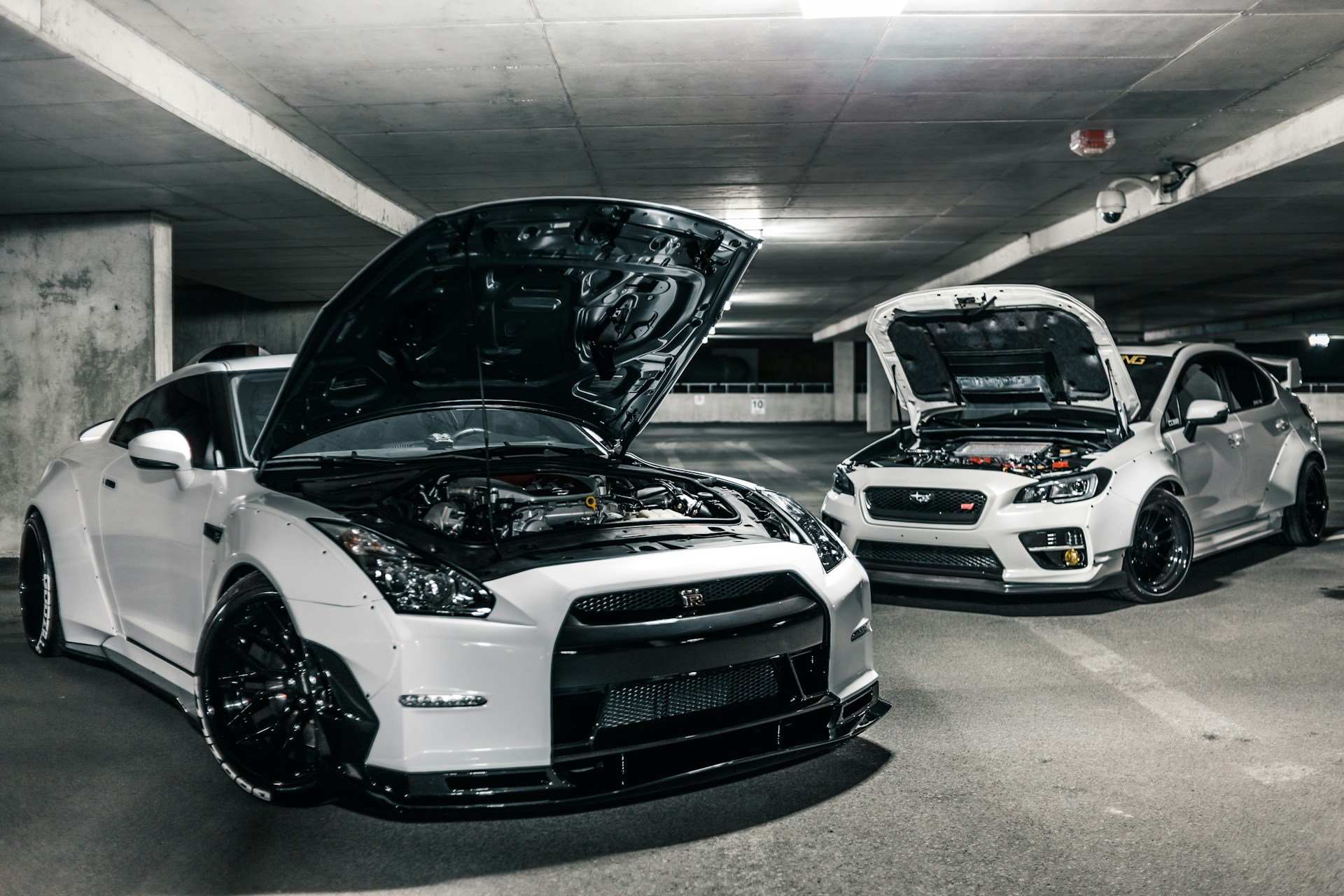
Car modifications are a great way to leave your stamp on your pride and joy, whether you want to sharpen its appearance, improve its handling or extract that little bit more performance. But before fitting that new exhaust, remapping the ECU or adding a set of underglow lights, it’s important to understand the rules.
Most car modifications aren’t automatically illegal in the UK. However, a modification could make your vehicle unlawful to use on public roads; particularly if it covers areas like lighting, visibility, noise, emissions or roadworthiness.
There’s also your modified car insurance to consider. Even a perfectly legal modification may need to be disclosed to your insurer.
In this guide, we’ll look at some of the most popular car modifications, which ones are restricted or illegal in the UK and what you should consider before modifying your car.
What counts as a car modification?
A car modification is generally any change that alters a vehicle from the manufacturer’s original specification. Modifications can range from relatively simple cosmetic changes to extensive performance upgrades.
If you’re just getting started, our car modifications for beginners guide explains some of the options available.
Common modifications broadly fall into two categories:
Cosmetic car modifications
These change how the vehicle looks rather than significantly altering its performance.
These include things like:
- Aftermarket alloy wheels
- Body kits
- Spoilers
- Vehicle wraps
- Window tints
- Interior changes
- Modified lighting
Even cosmetic changes can have legal or insurance implications, so don’t assume that a modification doesn’t matter simply because it doesn’t make the car faster.
Performance car modifications
Performance modifications alter areas like power, braking, handling or engine response. These can include:
- ECU remapping
- Upgraded turbochargers and superchargers
- Performance exhaust systems
- Air intake modifications
- Suspension upgrades
- Brake upgrades
- Engine modifications
Owners making substantial performance changes should also consider whether standard insurance is appropriate. Performance car insurance can provide a more suitable option for vehicles where performance forms a significant part of the risk.
What car modifications are illegal in the UK?
There isn’t one simple list of car modifications that are always illegal.
Instead, many modifications are allowed, provided they meet the relevant UK regulations after they’ve been installed. A legal modification can become unlawful if, for example, it makes your windows too dark, creates excessive exhaust noise or causes your lights to display a prohibited colour.
Here’s a quick overview:
| Modification | Legal? | Main consideration |
| Window tints | Restricted | Front windows must meet light transmission requirements. Below the legal limits, the vehicle can become unlawful to use on the road. |
| Underglow | Restricted | Colour, visibility and operation matter. It can become illegal if it uses prohibited colours, flashes incorrectly or resembles emergency lighting. |
| Modified exhaust | Restricted | Noise and emissions rules apply. It can become illegal if modified to make the car excessively noisy or if emissions controls are affected. |
| Number plates | Restricted | Design, spacing and visibility requirements apply. Plates can become illegal if characters, spacing or styling breach display rules. |
| Lowered suspension | Generally legal | Vehicle must remain safe and roadworthy. |
| Body kits | Generally legal | Must be safely and securely fitted. |
| ECU remapping | Generally legal | Vehicle must remain roadworthy and emissions compliant. |
| Alloy wheels | Generally legal | Wheels and tyres must remain safe and suitable. |
Let’s look at the key restrictions in more detail.
Are underglows illegal in the UK?
Underglow lighting can be complicated and typically isn’t considered strictly legal or illegal in the UK. Whether you can legally use it on a public road depends on factors including the colour of the light, where it can be seen from and whether it flashes.
UK vehicle lighting rules restrict the colours of light that can be displayed in particular directions. For example, vehicles generally cannot show red light to the front, while white light must not normally be shown to the rear. Blue warning lighting is also tightly restricted.
This means an underglow installation that appears harmless could still cause problems if light is directly visible from an inappropriate direction or if it operates in a way associated with restricted warning lighting.
Flashing lighting is particularly restricted, so fitting a system capable of flashing or imitating emergency vehicle lighting is best avoided for road use.
If you’re installing underglow, check the current Road Vehicles Lighting Regulations and make sure the installation doesn’t dazzle or mislead other road users.

Which other car modifications are restricted?
Some of Britain’s most common car modifications are perfectly possible to make legally, but there are limits you need to stay within.
Window tints
Tinted windows are legal, but restrictions apply to the windscreen and front side windows.
For vehicles first used on or after 1 April 1985:
- The front windscreen must allow at least 75% of light through.
- The front side windows must allow at least 70% of light through.
There are no equivalent light-transmission limits for the rear windscreen or rear passenger windows. If the front windows are excessively tinted, you could receive a prohibition notice, penalty notice or court summons.
Remember that factory glass may already have some tint, so adding film on top can push the overall light transmission below the permitted level.
Modified exhausts
A modified exhaust can change the sound, appearance and sometimes performance of a car, but louder doesn’t necessarily mean legal.
GOV.UK states that it is illegal to modify an exhaust system to make a vehicle noisier than it was after type approval. Police can also take action where a silencer isn’t working as designed or a vehicle creates excessive noise.
MOT testers assess whether exhaust noise is unreasonably above the level expected from a similar vehicle fitted with a standard silencer.
Modifications that interfere with emissions-control equipment can create further roadworthiness and MOT issues, so make sure any exhaust changes remain suitable for road use.
Number plates
Personalised and modified number plates are another area where small changes can create surprisingly large problems.
UK number plates have requirements governing their material, backgrounds, characters and markings. Current rules allow 3D raised characters, but characters must meet the required format and must not be rearranged or altered to make the registration difficult to read.
Incorrectly displayed plates can result in a fine of up to £1,000 and an MOT failure.
Our dedicated guide to UK number plate laws and customisations explains the rules in more detail.
Modified headlights and lighting
Lighting modifications need particular care because different lamps have specific requirements around colour, positioning and operation as defined by The Road Vehicles Lighting Regulations 1989.
Changes that cause a lamp to show red light to the front or white light to the rear can result in an MOT major defect, while obligatory lights also need to meet the relevant visibility and operation requirements.
That makes tinted light covers, unusual bulb colours and aftermarket lighting worth checking carefully before installation.
Lowered suspension
Lowering a car isn’t automatically illegal. However, any ‘structural modification’, including suspension upgrades, must leave the vehicle safe and roadworthy. Extreme lowering can create problems if tyres contact the bodywork, steering is restricted or other components are compromised.
Consider the complete setup rather than simply how low the car sits. Correct alignment, appropriate tyres and suitable components all matter.
Body kits and spoilers
Spoilers, splitters, side skirts and other body modifications can transform a car without necessarily affecting its road legality.
However, components need to be fitted securely and shouldn’t create a danger to other road users.
Planning something more extensive? Our guide to car body kits covers some of the main considerations before fitting one.
ECU remapping and performance tuning
ECU remapping changes the software controlling aspects of your engine and can alter power and torque output.
Remapping isn’t automatically illegal, but your vehicle still needs to meet the roadworthiness and emissions requirements that apply to it.
It’s also a significant change from the manufacturer’s standard specification, so make sure your insurer knows about it. The same principle applies to turbo upgrades, superchargers and substantial engine modifications.
Aftermarket wheels and tyres
Changing alloy wheels is one of the most common ways to personalise a vehicle.
Aftermarket wheels are generally fine provided they’re suitable for the vehicle and don’t create safety problems. Pay attention to wheel size, offset, tyre dimensions and clearances, particularly if the vehicle has also been lowered.
Tyres must remain road legal. For cars, the minimum tread depth is 1.6mm across the central three-quarters of the tyre and around its entire circumference.
Do car modifications affect insurance?
A car modification can affect your insurance even if the modification itself is completely legal.
Changes can alter factors an insurer considers when assessing a vehicle, including its value, performance, repair requirements and attractiveness to thieves.
That’s why you shouldn’t assume that seemingly minor cosmetic changes don’t need to be mentioned.
Keith Michaels specialises in modified car insurance, helping drivers find specialist cover for cars that don’t necessarily fit neatly into the standard insurance market.
What modifications do I need to tell my insurer about?
Your insurer needs accurate information about your vehicle, and you should disclose modifications in line with its policy requirements.
That can include changes like:
- ECU remapping
- Performance exhausts
- Engine upgrades
- Suspension changes
- Non-standard alloy wheels
- Body kits and spoilers
- Vehicle wraps
- Window tints
- Brake upgrades
- Interior modifications
If you’re uncertain whether something counts, it’s safer to ask rather than assume.
Our guide to declaring modifications to your car insurer goes into more detail about what you should disclose and when.
What happens if you don’t declare car modifications?
Failing to disclose a relevant modification can create serious problems with your insurance.
The exact outcome will depend on the circumstances, what information should have been disclosed and how the insurer would have treated the risk had it known about the modification.
It isn’t accurate to say that every undeclared modification automatically makes every policy invalid. However, non-disclosure can affect how an insurer deals with a policy or claim, so it’s not something to ignore.
Read our guide to modified car insurance and non-disclosure for more information.
Where possible, speak to your insurer before carrying out significant modifications. That gives you the opportunity to understand how the change could affect your cover before spending money on the work.